Upselling
Hotel Upselling: A Practical Guide for Managers
· By Nokrach Gerard Trevor
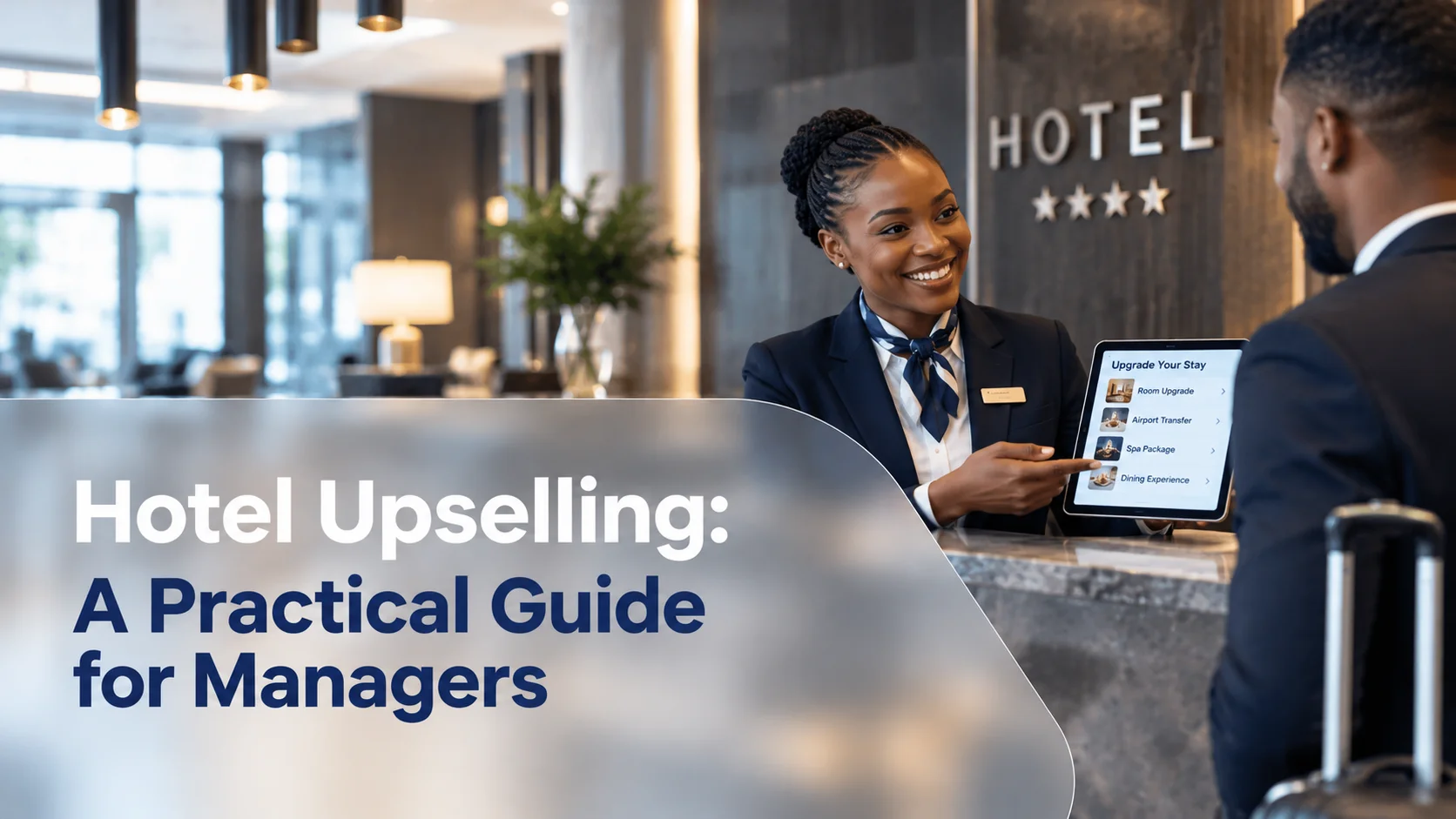
Hotel upselling is one of the most practical ways for hotels to generate additional revenue without relying entirely on attracting more bookings. Yet many hotels have revenue opportunities sitting within their existing guest relationships: a premium room that could be offered before arrival, an airport transfer a guest has not arranged, or a restaurant service they have not discovered.
The challenge is not always a lack of services or guest demand. Often, guests are simply unaware of what is available, staff are too busy to promote every service consistently, and follow-ups fall through the cracks.
For hotel managers, the opportunity is to make upselling a structured, guest-friendly process rather than something that depends entirely on individual staff initiative.
This guide explains what hotel upselling means, which opportunities hotels can explore, how to build a repeatable process, and how to measure results without compromising the guest experience.
What Is Hotel Upselling?
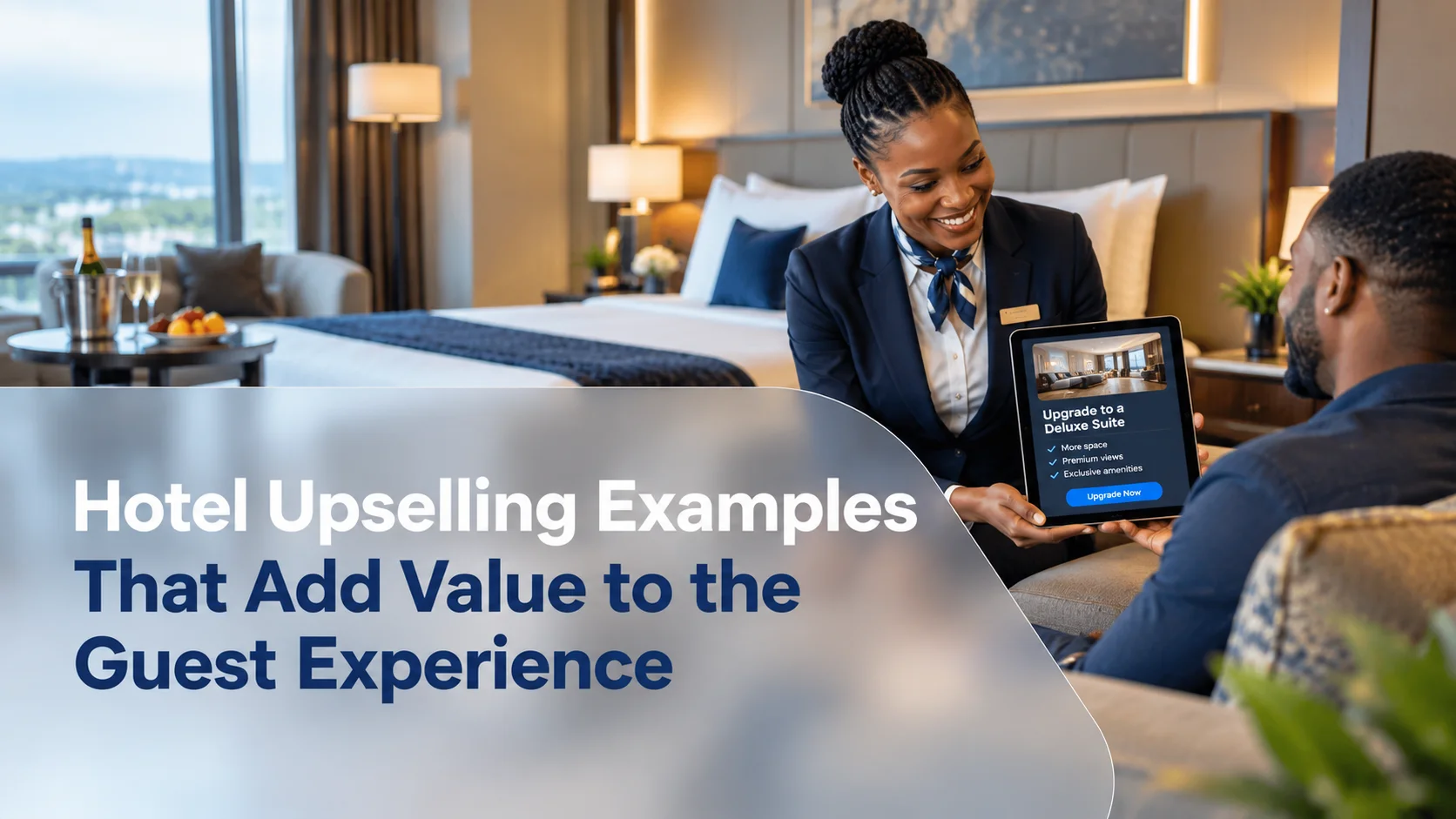
Hotel upselling is the practice of encouraging a guest to purchase a higher-value room, service, or experience than they originally selected, when the offer provides relevant value to that guest.
For example, a hotel might offer a guest who booked a standard room the option to upgrade to a superior room for an additional charge. It could also offer a premium version of a service the guest is already considering.
Upselling is different from cross-selling, although the two techniques often work together.
ApproachWhat it meansHotel exampleUpsellingEncouraging a guest to choose a higher-value version of an existing purchaseOffering a room upgrade for an additional feeCross-sellingOffering a complementary product or serviceOffering an airport transfer to a guest with a confirmed room reservation
Both approaches can help hotels capture more value from existing guests. The key is to present relevant services at the right time, with clear pricing and a straightforward way to accept or decline.
Why Hotel Upselling Often Fails
Hotels may already have everything they need to generate additional revenue: rooms, restaurants, transport services, wellness facilities, tours and other paid amenities. However, having these services available does not guarantee that guests will purchase them.
Several operational challenges can prevent hotels from capturing these opportunities.
1. Guests do not know what is available
A guest may spend two nights at a hotel without knowing that the property offers airport transfers, private dining, spa treatments or guided excursions.
If the guest never discovers the service, the hotel loses a potential sale before the conversation even begins.
2. Staff are too busy to sell consistently
Front-desk teams manage check-ins, check-outs, guest requests, complaints, telephone calls and other operational responsibilities.
Under this pressure, upselling can become an occasional activity rather than a consistent process. One receptionist may mention a room upgrade, while another may forget to mention it entirely.
3. Offers arrive at the wrong time
Timing influences whether an offer is useful.
A guest might appreciate an early check-in option before arriving after an overnight journey. The same offer becomes irrelevant once the guest has already checked in.
Similarly, a spa offer might be more useful during the planning stage of a leisure stay than in a message sent after the guest has checked out.
4. Pricing and availability are unclear
An offer that does not explain its additional cost, conditions or availability creates unnecessary friction.
Hotels should establish clear prices, eligibility rules and capacity limits before presenting an offer. A service should never be promoted as available unless the hotel can reasonably fulfil it.
5. Guest interest is not followed through
A guest may ask about a transfer, express interest in a room upgrade or request more information about a dining experience. If nobody follows up, the opportunity can disappear.
The problem is not necessarily that the guest refused. The hotel may simply have failed to complete the process.
6. Management cannot see what generated revenue
Without reliable records, managers may know that staff sent offers but not how many guests accepted, whether the services were delivered or how much additional revenue was generated.
An effective hotel upselling strategy connects the offer to the guest's response, service fulfilment and resulting revenue.
Hotel Upselling Opportunities: Practical Examples
The most effective hotel upselling strategies start with services a property already offers and can deliver reliably. The examples below illustrate opportunities that managers can adapt to their facilities, guest profiles and operating capacity.
1. Room upgrades
Room upgrades are among the clearest hotel upselling examples.
A guest who booked a standard room may appreciate a larger room, a better view, a balcony or access to additional amenities.
Example offer:
"Hello [Guest Name], we look forward to welcoming you to [Hotel Name]. We currently have an upgrade option available for your stay, offering [specific benefit] for an additional [price] per night. Would you like us to share the details?"
The hotel should confirm room availability and the applicable price before sending the offer.
2. Early check-in and late check-out
Guests arriving early or departing later may value additional flexibility.
Hotels can consider offering early check-in or late check-out for a fee when room availability, housekeeping schedules and operational policies allow it.
Example offer:
"We hope you're looking forward to your stay. If you'd like a little more flexibility on arrival, early check-in may be available for [price], subject to availability. Would you like us to check this for you?"
The wording should make any availability conditions clear.
3. Restaurant and dining services
Restaurants, room service, breakfast packages and special dining experiences can create additional sales opportunities.
For instance, a guest staying on a bed-and-breakfast rate may be interested in a dinner reservation. A couple celebrating an anniversary may appreciate a special dining arrangement.
Example offer:
"Would you like us to reserve a table at our restaurant for your stay? We offer [specific dining experience] at [price], and we'd be happy to share the available times."
The aim is to make a useful option visible, not to pressure every guest into purchasing a meal.
4. Spa and wellness services
Hotels with spas, massage services, fitness facilities or wellness packages can introduce these options to guests whose stay and preferences make them relevant.
A leisure guest may welcome a spa treatment after a long journey, while a business traveller with a tight schedule may not.
Personalisation matters more than sending the same promotion to everyone.
5. Airport transfers and private transport
Airport transfers are particularly relevant when guests have upcoming arrival or departure journeys.
A hotel can ask whether a guest would like transport arranged, making the service easier to discover and book.
Example offer:
"Hello [Guest Name], would you like us to arrange airport transport for your upcoming arrival? Our transfer service is available for [price], subject to confirmation. Let us know if you'd like to make arrangements."
6. Tours, excursions and local experiences
Hotels serving leisure travellers may offer guided tours, cultural experiences, excursions or other local activities.
These offers work best when they match the guest's interests, available time and travel plans.
7. Other hotel services
Depending on the property, additional opportunities may include laundry, meeting-room upgrades, conference packages, private events and other paid services.
Managers should prioritise offers that have clear commercial value, sufficient delivery capacity and a genuine reason to be relevant to the guest.
How to Build a Hotel Upselling Process
Upselling becomes more reliable when it follows a defined workflow rather than relying on memory or individual initiative.
Hotel managers can use this seven-step process to get started.
Step 1: Define the services and prices
Create a simple catalogue of services available for upselling.
For each service, record its description, price, conditions, availability requirements and the team responsible for fulfilment.
Start with a manageable selection instead of attempting to promote everything at once.
Step 2: Establish eligibility and capacity
Decide which guests qualify for each offer and under what conditions it can be presented.
For example, a room upgrade should only be offered when an appropriate room is available. Early check-in should respect housekeeping capacity and the property's check-in policy.
These rules protect both revenue opportunities and operational reliability.
Step 3: Identify relevant guest moments
Determine when an offer is most likely to be useful.
A room upgrade may be relevant before arrival. A restaurant reservation may be useful during the stay. Transport arrangements may be relevant before departure.
The objective is to connect the offer to the guest's circumstances rather than send messages according to an arbitrary schedule.
Step 4: Present a clear, relevant offer
Explain what the guest receives, how much it costs and how to respond.
Use straightforward language, avoid exaggerated claims and make declining easy.
Where appropriate, use information the guest has already provided or expressed interest in, rather than making assumptions about their preferences.
Step 5: Record the guest's response
Track whether the guest accepted, declined, requested more information or did not respond.
This information helps staff avoid repeating unwanted offers and gives management a clearer picture of guest interest.
Step 6: Fulfil accepted offers
Once a guest accepts, the responsible department must receive the relevant details.
A room upgrade needs to be reflected in the hotel's arrangements. A dining reservation needs to reach the restaurant team. A transfer booking needs to reach the transport provider or responsible staff member.
An accepted offer that is never delivered can damage trust and create complaints.
Step 7: Measure the result and improve
Record the outcome of each offer, including its value and whether the service was fulfilled.
Review which offers perform well, which generate complaints and where guests lose interest. Use the findings to refine eligibility, timing, messaging and pricing.
When Should Hotels Upsell Guests?
The guest journey provides several opportunities to present relevant offers. Each stage has different priorities.
Before arrival
After a reservation is confirmed, the hotel can introduce relevant services and help the guest plan their stay.
Potential offers include room upgrades, airport transfers and special arrival arrangements.
During pre-arrival communication
As arrival approaches, the hotel can make targeted offers based on the guest's stay dates, booking details, known preferences and available services.
The hotel should avoid overwhelming guests with multiple messages or offers they have already declined.
During the stay
Once the guest has arrived, the hotel can introduce relevant dining options, spa services, activities or other amenities.
Timing should reflect the guest's schedule and the practical usefulness of the service. A guest who has just checked in may appreciate information about dining, while another may prefer to settle in without additional messages.
Before departure
The hotel can offer late check-out or arrange transport where availability and operating conditions permit.
After departure, the focus should shift from selling an immediate stay service to requesting feedback, encouraging reviews and maintaining the relationship for future visits.
The principle is simple: present an offer when it is useful to the guest, available to the hotel and appropriate for the stage of the stay.
How to Keep Hotel Upselling Guest-Friendly
Successful upselling should enhance the guest's options, not make them feel that every interaction is a sales pitch.
Hotel managers can protect the guest experience by following these practices.
Personalise offers: Use relevant booking information and expressed interests to determine which services are worth presenting.
Be transparent about pricing: State the additional cost and explain any important conditions before the guest accepts.
Use low-pressure language: Invite guests to consider an offer rather than implying they should purchase it.
Respect preferences and consent: Honour communication preferences, applicable consent requirements and requests not to receive further offers.
Set frequency limits: Avoid sending several promotions in quick succession or repeating an offer after a guest declines.
Verify availability: Do not promote services the hotel cannot deliver under the stated conditions.
Make fulfilment a priority: Ensure that the relevant team receives accepted requests and understands what needs to happen next.
How automation can support hotel upselling
Automation can help hotels identify opportunities and follow up more consistently, particularly when teams are busy or guest communication takes place across different channels.
For example, a platform can use reservation information and a hotel's service catalogue to identify a potentially relevant offer, communicate it to the guest and record the response.
HOSCover is designed to support this process by connecting guest context, available hotel services, targeted communication, guest responses, operational fulfilment and revenue measurement. Its upselling engine is intended to communicate with guests through WhatsApp and support the process from the initial offer through to the recorded outcome.
Automation does not remove the need for sound hotel policies. Managers still need to define permitted offers, prices, eligibility, contact frequency and the circumstances in which a conversation should be handed to a staff member.
The goal is to make good commercial practices more consistent without sacrificing the personal service that guests expect.
Metrics Hotel Managers Should Track
A hotel upselling strategy should be evaluated by the quality of the offers and the commercial results they produce, not simply by the number of messages sent.
Managers should begin with a small set of measurable indicators.
MetricWhat it tells youOffer reachHow many eligible guests received an offerEngagement rateHow many guests responded or interacted with an offerAcceptance rateThe proportion of offers acceptedFulfilment rateHow many accepted offers were successfully deliveredAdditional revenueThe revenue attributable to completed upsell salesContribution margin, where availableHow much remains after the relevant costs of delivering the serviceComplaints and opt-outsWhether offers are creating friction or unwanted communication
For a straightforward acceptance rate, divide the number of accepted offers by the number of offers delivered, then multiply by 100.
For example, if a hotel delivers 100 offers and 12 guests accept, its offer acceptance rate is 12%.
However, acceptance alone does not tell the full story. Managers should also check whether those offers were fulfilled, whether payment was completed and whether the additional revenue justified the cost of delivering the service.
Where possible, compare results by service, guest segment, timing and communication method. This helps identify which opportunities deserve more attention.
Frequently Asked Questions
What is hotel upselling?
Hotel upselling is the practice of encouraging guests to purchase a higher-value room, service or experience than they originally selected. Examples include room upgrades, premium dining packages and higher-tier service options.
Is upselling the same as cross-selling?
No. Upselling encourages a guest to choose a higher-value version of an existing purchase, while cross-selling offers a complementary product or service. A room upgrade is an upsell; offering an airport transfer to a guest with a room reservation is a cross-sell.
What services can hotels upsell?
Hotels can explore room upgrades, early check-in, late check-out, premium dining, spa treatments, airport transfers, excursions and other paid services. The appropriate options depend on the hotel's facilities, guest needs, pricing, availability and ability to fulfil each offer.
When is the best time to upsell hotel guests?
There is no single best time for every offer. Room upgrades and transport may be useful before arrival, while dining and wellness services may be more relevant during the stay. Offers should be timed according to guest context, service availability and the practical value they provide.
How can hotels measure upselling success?
Track offer reach, engagement, acceptance, fulfilment, attributable revenue, contribution margin where available, complaints and opt-outs. These measures help managers understand not only whether guests accept offers, but also whether the process generates sustainable commercial value without harming the guest experience.
A Practical Hotel Upselling Checklist
Hotel managers do not need to overhaul their operations to begin improving upselling. A focused pilot using two or three services can help establish a baseline and identify what works.
Use the following checklist to get started.
Select two or three services with clear revenue potential.
Define prices, eligibility rules, availability and service conditions.
Identify the guest segments and stages of the stay where each offer may be useful.
Prepare clear, guest-friendly offer messages.
Train relevant staff on guest responses, hand-offs and fulfilment.
Establish communication consent, frequency limits and opt-out procedures.
Record offers, responses, completed sales and attributable revenue.
Measure baseline performance before making changes.
Review results regularly and refine the offers that are not performing well.
Start small, measure consistently and expand the process when the hotel can reliably fulfil the offers it makes.
Turn Hotel Upselling Into a Repeatable Process
Hotels already have guests, facilities and services that can create additional commercial value. The challenge is making those opportunities visible, relevant and actionable throughout the guest journey.
A well-managed hotel upselling strategy connects the right service to the right guest at the right time, then ensures that accepted offers are fulfilled and the results are measured.
When this process is consistent, upselling becomes more than an occasional front-desk conversation. It becomes a structured way to improve service discovery, support hotel teams and capture additional revenue from existing guest relationships.
Want to make hotel upselling more consistent? Explore how HOSCover helps hotels identify relevant opportunities, engage guests, connect accepted offers to hotel operations and measure the revenue generated.